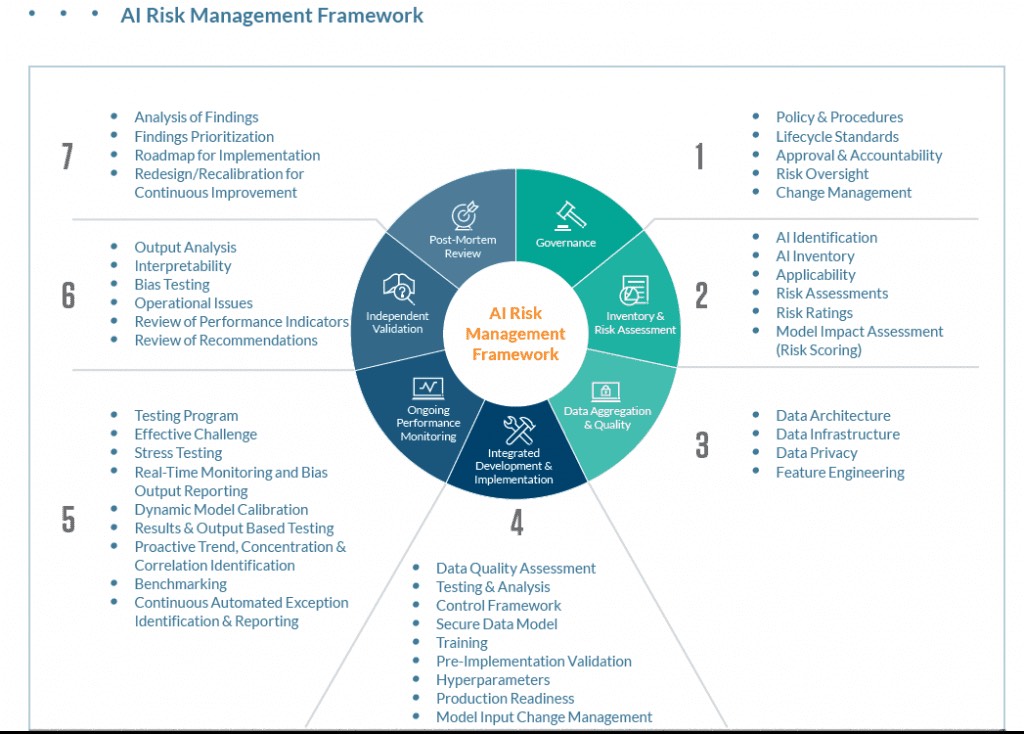
Model for Scalable & Responsible AI Governance
Challenge
Our client recognized the accelerating adoption of AI in healthcare brought both potential and significant risk, ranging from data privacy, security, and regulatory uncertainty, to ethical dilemmas and biased outcomes. Rapid changes in global and regional legislation heightened the urgency for a governance solution that could balance innovation with risk minimization, ensure compliance across regions, and maintain stakeholder trust
What we did
- Developed a comprehensive, risk-based AI Governance Playbook based on international best practices and the EU AI Act framework
- Established a dual global and regional governance model:
- Global AI Governance Committee defined the overall strategy, set the single-source Global AI Policy, and managed coordination and compliance monitoring
- Regional AI Committees tailored implementation to local regulations, conducted project oversight, and managed region-specific risks while aligning with global standards
- Created robust risk assessment tools and procedures, including an AI Risk Matrix for systematic project classification (unacceptable, high, limited, minimal risk) and regular audits for bias, explainability, privacy, and security
Result
- Achieved a consistent approach to AI governance across all regions, ensuring all projects – custom, public LLMs, open source, and regulated – were tracked, classified, and reviewed for compliance and risk.
- Streamlined risk management with clear procedures for project intake, approval, and escalation, minimizing exposure to non-compliance and ethical pitfalls.
- Fostered a culture of responsible AI use via ongoing training, stakeholder engagement, and transparent decision-making, with achievements tracked and reported to executive leadership
Key Takeaways
- Iterative governance is essential: Regular updates, training, and lessons learned sessions sustain alignment with rapidly evolving technology and regulations
- Collaboration between global and regional teams is critical: Regional flexibility enables effective compliance with local laws, while global policy ensures organization-wide consistency
- Embedding risk assessment in every stage of the AI project lifecycle builds trust, accountability, and long-term value from AI initiatives